QuestionFoundationsBy The Hook Desk27 Sep 2026
How do I work into the back bump of a foundation chain?
Three ways to work a foundation chain give three different bottom edges. The back-bump method is the slowest and the only one that produces an edge you would be happy to leave visible.
Step by step
Note 1The three insertion points
Into the top two loops: fastest, and gives a flat edge with a chain visible along the bottom. Into the back loop only: gives a stretchy edge with a ridge on one side. Into the back bump: gives a straight edge with a neat row of V's on the right side and nothing protruding.
The back bump is the single strand that runs along the underside of a chain, appearing as a small horizontal bar when you tilt the chain towards you. Every chain has exactly one.
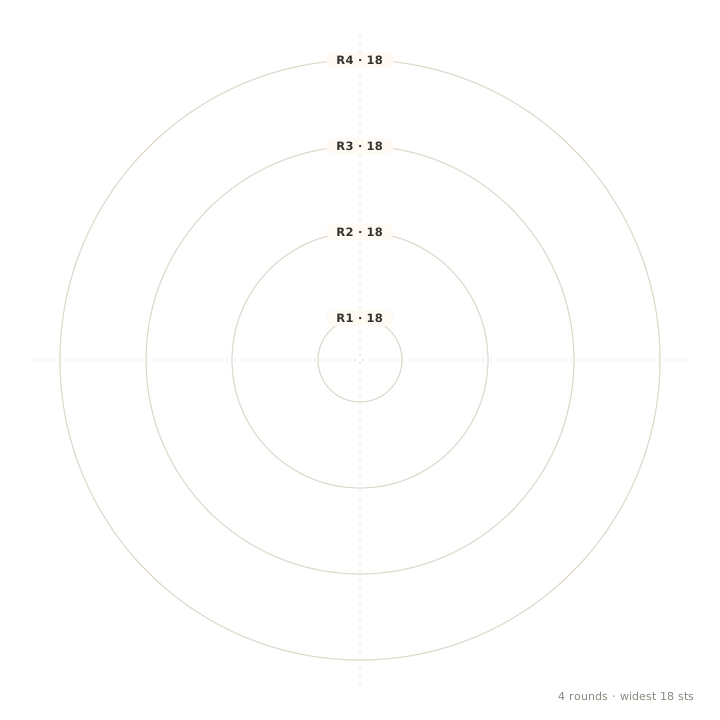
R1 · 18 stsWorking the first row
Chain one more than the stitch count you need — 19 for 18 sc. Tilt the chain so the bumps face you, skip the first bump, and work the first sc into the second bump. Continue along the bumps to the end; you should land exactly on the last stitch count.
Chain a little more loosely than usual. The bump is tighter than the top loops, so a chain worked at normal tension makes the first row slow and cramped.
Note 3When it is worth the extra time
It is worth it whenever the bottom edge is visible: blanket edges, scarves, garments hemmed at the bottom, anything photographed flat. It is worth it whenever the piece will be joined to another piece along that edge, because two back-bump edges seam together invisibly.
It is not worth it for anything that will be hidden: amigurumi bases, the inside of a bag lining, or the first row of a piece that gets a border worked round it afterwards.
Where it usually goes wrong
- Skipping the wrong chain. Counting from the hook, the first bump is the one immediately below it; start in the second or you lose a stitch.
- Working into the back bump while the chain is twisted, which puts the bumps on the wrong side halfway along.
- Using a hook one size down to make the bumps easier to find, which defeats the purpose of a stretchy edge.