QuestionGauge & yarnBy The Hook Desk4 Oct 2026
My stitch count matches but my row count does not. What now?
Almost every pattern quotes stitches per 10 cm and stays silent about rows. In flat work that is survivable; in the round it is not, because there is no row you can add at the end.
Step by step
Note 1Why row gauge is the harder one
Stitch width is set by the hook and the yarn; stitch height is set by how far you pull up each loop. That pull-up is a habit, not a measurement, and it changes with mood, fatigue and how tightly the yarn feeds off the ball.
Across a group of ten crocheters working the same yarn and hook, stitch width typically varies by 8% and row height by 15%. So matches on width and mismatches on height are the normal case, not a sign you did something wrong.
R10Fixing it by editing the round count
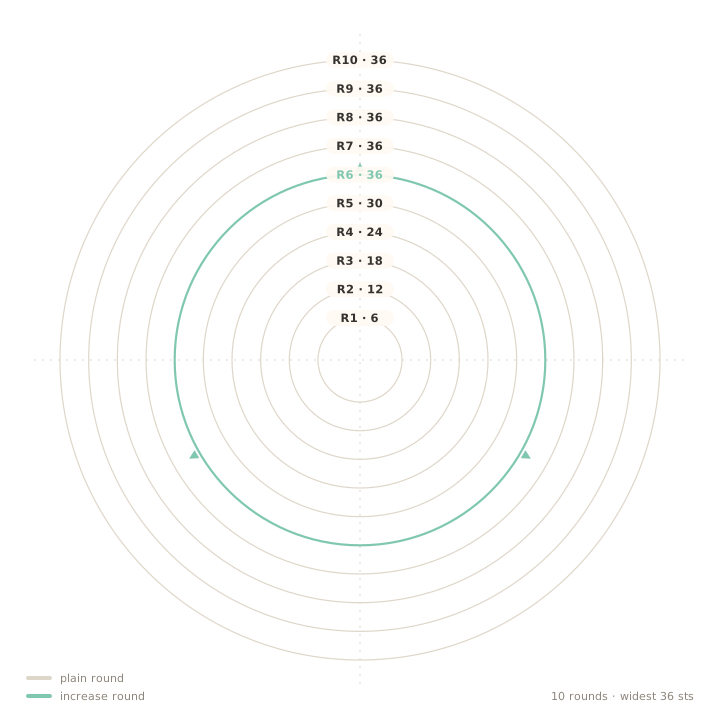
Suppose the pattern gives a body of 30 rounds and your rows are 10% shorter, so you need 33. Split the three extra rounds across the straight sections, not the shaping: add one plain round after the last increase, one in the middle of the body, and one just before the first decrease.
Keep the increase and decrease rounds exactly as written. Those rounds define the silhouette; the plain rounds between them only define the height. This is why adding rounds is safe and changing the shaping is not.
Note 3When to change the stitch instead
If the mismatch is larger than about 15%, adding rounds stops being practical — you would be adding nine rounds to a 30-round body and the fabric would look stretched. At that point drop to a shorter stitch or go up a hook size and let the width grow with it.
One more option for amigurumi specifically: since the piece is stuffed, height errors of 5% disappear into the stuffing. Measure the finished item, not the round count, and stop when the piece reaches the right size.
Where it usually goes wrong
- Re-working the whole piece because rows are off by one or two over 30 rounds. That is a 5% error and it is inside normal variation.
- Adding the extra rounds inside a decrease section, which changes the taper and can leave a visible kink.
- Measuring row gauge on a swatch that has been stretched to look neat.