QuestionShapingBy The Hook Desk11 Oct 2026
How do I stagger increases so there is no visible line up the piece?
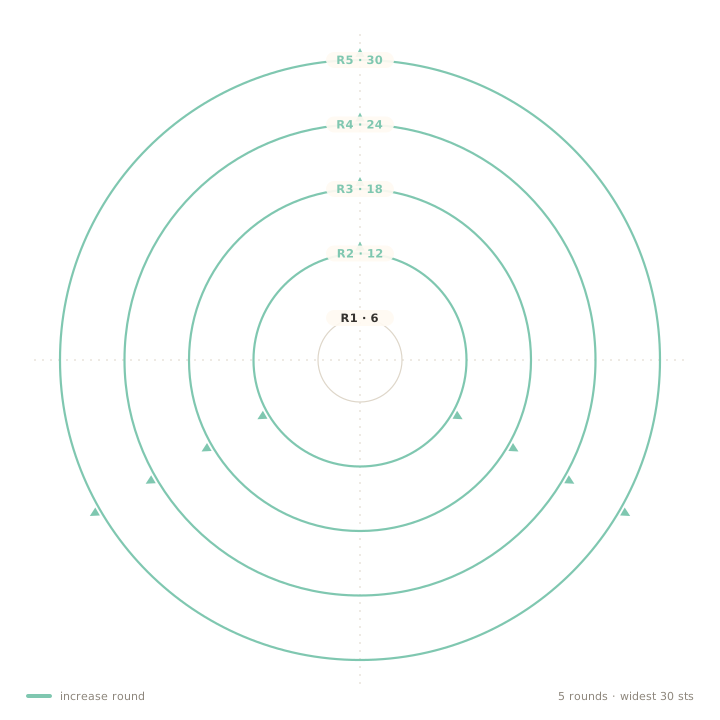
Staggering is what separates a sphere from a lumpy ball with six ridges. It costs nothing but attention, and it is the difference between a shape that reads as round from every angle and one that only looks round in the pattern photo.
Step by step
R5 · 30 stsWhat stacking does over ten rounds
An unstaggered 6-point schedule puts 60 increases into 6 columns over ten rounds. Each column is a line of double-thickness fabric; the six lines are visible as ridges and, after stuffing, they catch light differently from the surrounding stitches.
Offset the points every round and the same 60 increases are spread over 60 different stitch positions. The fabric is the same weight; the difference is entirely in where the bulk sits.
Note 2A schedule you can follow without a chart
For a 6-point increase round that has 4 sc between increases, work: [inc, 4 sc] three times to reach the halfway mark, then 2 sc, then [inc, 4 sc] three times, then 2 sc to close. The two extra sc in the middle shift the second half by two stitches.
Repeat that shape every round, adding one more sc between increases as the round number grows. The offset alternates left and right automatically, which is exactly what a curve wants.
Note 3When to leave the ridge in on purpose
Some patterns want the ridge. A pumpkin's lobes, a hexagon cushion and a Christmas bauble all read as segmented objects, and stacking the increases is the cheapest way to get that segmentation without a colour change.
The tell is whether the piece should look like a sphere or like a shape made of sections. If you cannot say which, stagger — an accidental ridge is harder to explain than an accidental smooth surface.
Where it usually goes wrong
- Staggering increases but not the matching decreases, which puts the ridge in on the way out.
- Offsetting by one stitch every round instead of alternating, which builds a slow spiral ridge instead of removing one.
- Applying staggering to a pattern whose round counts depend on the ridge positions — check the decrease rounds first.