QuestionGauge & yarnBy The Hook Desk20 Aug 2026
My gauge is off. Should I change hook or change yarn?
Gauge is the only measurement that decides whether the finished object matches the numbers in the pattern. It is also the thing most people skip, then blame on the pattern.
Step by step
Note 1Measure before you decide anything
Work a 15 x 15 cm swatch in the stitch the pattern uses, then measure the middle 10 cm in three places and average. Do not measure the edges — the first and last two stitches of every row are distorted by turning.
Write both numbers down: stitches per 10 cm and rows per 10 cm. Patterns usually quote stitches only, but rows matter more in the round, because a spiral has no row to hide an error in.
Note 2Deciding between hook and yarn
If your stitch count is within 10% and the fabric feels right, change the hook: half a millimetre at a time, one direction only. Going from 3.5 mm to 4.0 mm typically buys about one extra stitch per 10 cm in DK weight.
Change the yarn when the problem is not arithmetic. If a 4 mm hook at recommended gauge produces a fabric you could stand a mug on, the yarn is too heavy for the item and no hook will fix it — you need a lighter weight at a looser gauge, not a bigger hook at the same one.
Note 3When to stop adjusting and re-plan
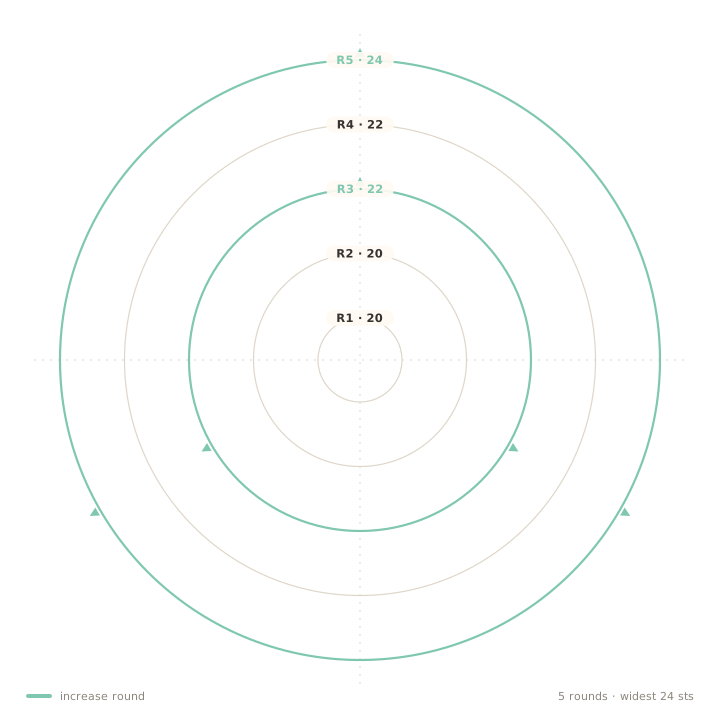
If closing the gauge gap needs more than 1 mm of hook change, the pattern and the yarn are mismatched. Either pick a different yarn or work at your own gauge and recalculate: a 12 cm ball at 22 sts / 10 cm becomes a 13 cm ball at 20 sts / 10 cm, and the increase rounds still work.
For amigurumi, being one stitch tight per 10 cm is usually harmless because the piece is stuffed outward. For a garment or a hat, one stitch per 10 cm over a 50 cm circumference is five stitches of error, which is the difference between a hat that fits and one that leaves a mark.
Where it usually goes wrong
- Measuring a swatch straight off the hook. Let it rest flat for an hour, or steam it the way you will wash the finished piece.
- Measuring rows with the swatch stretched. Rows compress; measure them relaxed.
- Buying one hook size and assuming it is the pattern's size. Hook sizing is not standardised across brands — a 4.0 mm from one maker is not always a 4.0 mm from another.