QuestionRounds & spiralsBy The Hook Desk23 Sep 2026
How do I count rounds in a spiral when nothing marks them?
Row count decides where you stop increasing and start decreasing, so a spiral project without a reliable count is a project that will not match its pattern.
Step by step
Note 1Why spirals are hard to count
In joined rounds the top of each round is a chain-1 and a slip stitch, so the boundary is a real, countable edge. In a spiral there is no such edge: the fabric is one continuous helix and the only visible clue is the spiral line itself, which drifts diagonally.
That drift is the key. Each round starts one stitch to the right of where the last one started, so the start points form their own column of stitches, each one sitting a little above and to the right of the previous.
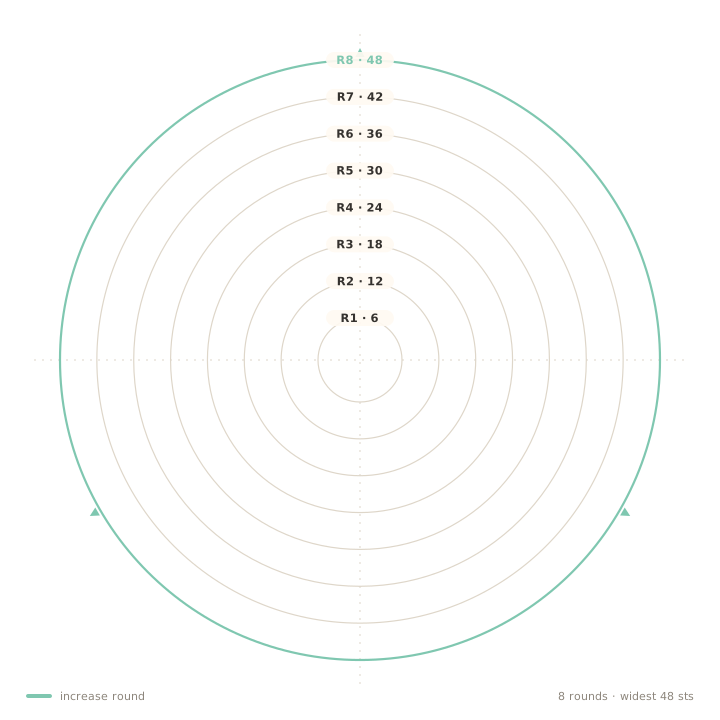
R8 · 48 stsCounting from the marker
Keep a marker in the first stitch of the current round and move it up every round. To count, follow the column of start stitches downward from the marker to the ring: each visible step is one round. On a 48-stitch round, that column is unmistakable because the steps are about 6 mm apart.
A faster method for tall pieces: measure. Ten rounds of amigurumi-tight sc in DK weight is 6 cm, so a 7.2 cm tube is 12 rounds. Check it once against a counted section and then trust the tape measure.
Note 3Marking without a marker
If you run out of markers, use a contrasting scrap of yarn laid across the round boundary and moved each time, or count the increase rounds only — a flat disc grows 6 stitches per round, so 36 stitches means you are on round 6 and nothing else.
What you should not do is rely on the pattern's stitch counts alone for a piece with straight rounds. Six identical rounds of 30 stitches contain no information about which one you are on.
Where it usually goes wrong
- Counting the visible spiral line instead of the start column; the line drifts and gives an answer one or two rounds out.
- Moving the marker every other round, which halves your count silently.
- Starting the count at the magic ring's tail rather than at the first true stitch.