QuestionFoundationsBy The Hook Desk20 Sep 2026
How many chains do I need to start a flat piece?
The chain is the only part of a project where you cannot check your work until it is too late to fix cheaply. Three extra chains cost nothing; three missing chains cost a whole restart.
Step by step
Note 1The arithmetic
For sc worked into the top loops: chain the stitch count plus one. The plus-one is the turning chain, which also counts as the first stitch's height. For 30 stitches, chain 31.
For sc worked into the back bump: chain the stitch count plus two. The first bump is always skipped and the chain itself needs one extra to be structurally complete. For 30 stitches, chain 32.
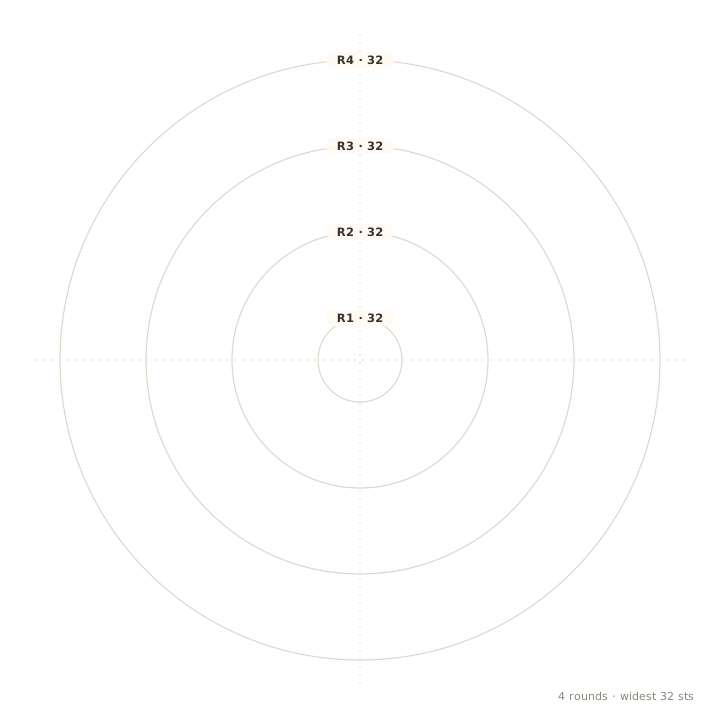
R1 · 32 stsCounting the chain before you commit
Count the chain on the hook side, from the hook backwards, and count the loop on the hook as the last one. Chains twist and the V's are easy to double-count; the back bumps are not, so if you are in doubt, flip the chain over and count bumps.
If you are short, undo the whole chain rather than fudging an extra stitch at the end. Adding a stitch at the end of a foundation row creates a wider corner that no border will hide.
Note 3Sizes worth memorising
A dishcloth is 30-35 stitches, a scarf 35-45, a baby blanket 100-120, a cushion front 60 x 60 at DK gauge. For amigurumi you almost never start with a chain at all — the whole project begins with a ring, so chain maths only applies to flat pieces and to the occasional flat base.
One practical rule: for anything over 80 chains, count them in groups of ten and place a marker in every tenth. Recounting 118 chains is a two-minute job with markers and a ten-minute job without.
Where it usually goes wrong
- Forgetting the plus-one and ending one stitch short on the first row, every single time.
- Counting the slip knot as a chain. It is not a chain; it does not get a V or a bump.
- Chaining 40 for a 40-stitch piece and then wondering why the first row has 39.